



Work-Life Balance Training
Background & Objectives
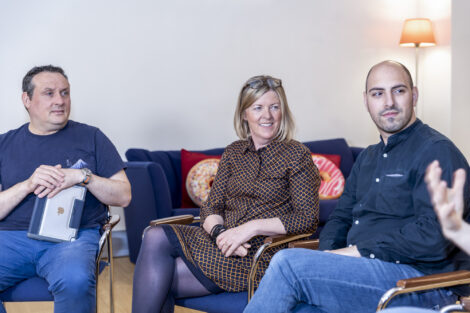
The Humane Society International invited Impact Factory to conduct a customised session aimed at achieving a better work-life balance. Balancing work and personal life effectively, also known as work-life balance, was central to the retreat’s objectives. This session was part of a broader team retreat in Loch Lomond, designed to support a team already recognised for its high levels of collaboration and care for one another. The goal of the session was to help them develop a shared approach to sustainable working practices.
With growing workloads, complex challenges, and a strong team ethic, the session aimed to encourage personal reflection. It also aimed to foster collective responsibility, and provide practical tools for balance. Importantly, it focused on maintaining momentum and purpose, achieving WorkLife Balance.

Programme Highlights
The session was shaped around the group’s values and willingness to explore new perspectives. Delegates were invited to consider their own needs and habits while building a practical team-wide framework. This framework could be returned to and evolved over time for balancing work and life.
Topics explored included:
- The Performance Over Pressure Graph
- Understanding the fine line between positive pressure and burnout is crucial. Learning how to recognise personal and team-wide warning signs supports WorkLife Balance.
- Creating a Living Charter
- As a group, the team co-created a set of shared principles to support work-life balance. This became a “living document” for accountability, encouragement, and celebration of small wins. It aligns with Work-Life Balance objectives.
- Reaching Out with Confidence
- Introducing a simple language framework for checking in with colleagues or raising concerns was aimed at fostering compassion and clarity.
- Pushback Techniques
- How to say “no” (or “not now”) without damaging relationships, crucial in maintaining WorkLife Balance.
- Self-Management in the Moment
- Managing stress responses involves creating space to choose a response instead of reacting automatically.
Techniques included: breathwork, acknowledging urgency while staying grounded, and asking solution-focused questions. These are essential for Work-Life balance.
- Managing stress responses involves creating space to choose a response instead of reacting automatically.
- Prioritisation and Planning Tools
- Exploring the Urgency vs. Importance matrix offers a visual and practical way to categorise tasks. It aids in delegating where appropriate and discarding or delaying lower-priority actions. This helps balance work and life.
- Ringfencing Time
- Delegates shared strategies such as scheduling meetings with oneself and setting email response windows. Limiting unnecessary meeting attendance and protecting PTO are crucial for Work-Life Balance.
Outcomes & Takeaways
The session was warmly received. Delegates appreciated the balance between practical frameworks and personal insight. There was a strong sense of trust and openness throughout, allowing for meaningful discussion and honest reflection. This significantly promoted Work-Life Balance.
Key takeaways included:
- Greater awareness of how pressure affects performance
- Tools for assertive communication and boundary-setting, which are important in Work-Life Balance
- Increased confidence in reaching out to others and asking for help
- A team-developed Work/Life Charter for ongoing accountability, ensuring sustainable work and life balance
See What We Can Do For You
If you like what you’ve seen and would like to know more please contact our team.

It was an absolute delight to be part of Humane Society International’s time in Loch Lomond.
We truly appreciated your enthusiasm and openness to trying new behaviours and exploring situational approaches to achieving a better work/life balance.
Throughout the session, your strong culture of helpfulness shone through, which is a fantastic foundation to build upon. We encourage you to harness this culture by holding one another accountable to the team charter you created—treat it as a living document that evolves with you.
Thank you for allowing us to support you on this journey – it’s been inspiring to work alongside such a committed group.